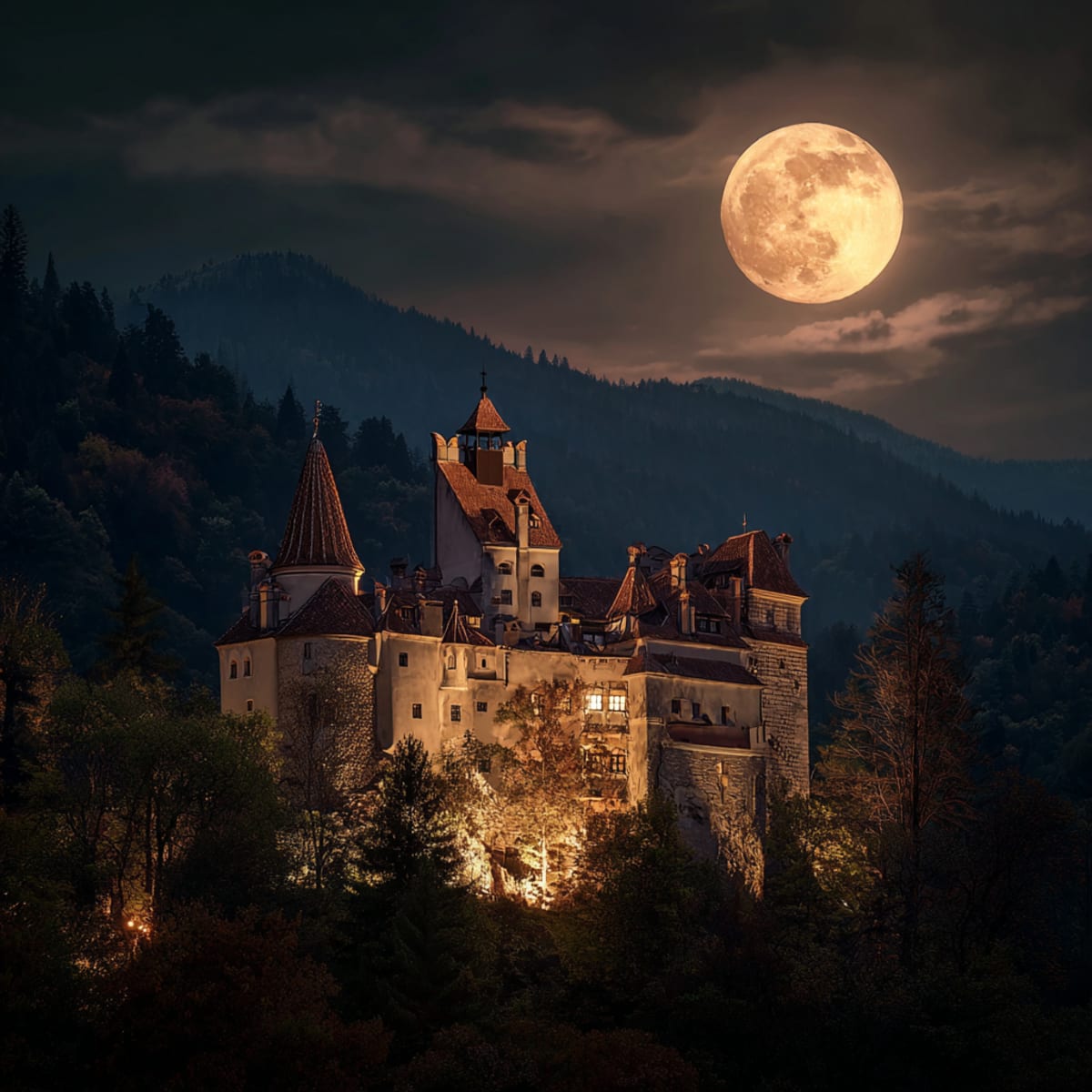
In Bloodlust and Secret Whispers, the mountains and forests of nineteenth-century Transylvania conceal more than family secrets. They are home to ancient superstitions, whispered curses, and fears that have survived for generations.
But how much of that atmosphere comes from history?
As it turns out, quite a bit.
Castles That Guarded the Mountain Passes
By 1850, many of Transylvania's castles had already stood for centuries. Built to guard mountain passes, defend territories, and house noble families, these imposing fortresses became part of a landscape rich in legends and superstition. Their isolated settings made them natural homes for stories of curses, mysterious inhabitants, and ancient secrets.
Wise Women, Healers, and Suspicions of Witchcraft
In rural communities, traditional remedies and beliefs in supernatural forces existed alongside religious practices.
Knowledge of herbs and healing might earn a woman respect, but accusations of harmful magic could also make someone an object of suspicion.
In Bloodlust and Secret Whispers, Lila and her grandmother inhabit that uncertain world, where the difference between a healer and a witch may depend entirely on what the neighbors believe.
The Restless Dead: Strigoi
Long before the modern vampire became a familiar figure in popular fiction, Romanian folklore contained stories of the strigoi.
These supernatural beings were not always identical to the vampires of modern novels. Depending on the tradition, they might be restless spirits, dangerous revenants, or living people believed capable of supernatural harm.
They were sometimes blamed for illness, misfortune, and unexplained deaths.
And villagers developed extraordinary ways of protecting themselves.
When Burial Wasn't Enough
Among the most unsettling traditions recorded by folklorists were rituals intended to prevent the dead from returning.
Accounts describe protective objects placed with bodies, the use of iron or wooden stakes, and, in some traditions, the disturbing or burning of remains believed to belong to dangerous revenants.
Such practices varied by region and period. They were expressions of fear and supernatural belief, not evidence that the dead actually returned.
But imagine living in a village where an unexplained death might lead your neighbors to suspect something far more frightening than disease.
In Bloodlust and Secret Whispers, villagers burn the bodies of those attacked by the Umbrawolf. The creature is fictional, but the fear that inspires such desperate measures has deep roots in folklore.
The Carpathians: A Landscape Made for Legends
The Carpathian Mountains provide a dramatic backdrop of forested slopes, isolated settlements, and winding passes.
In such a landscape, legends could become inseparable from familiar places. A ruined building, an abandoned path, or a death no one could explain might acquire a supernatural reputation.
For a Gothic novelist, the possibilities are irresistible.
Before Dracula, There Were Legends
Bram Stoker published Dracula in 1897, but he did not invent Eastern Europe's traditions of restless and dangerous dead.
The folklore of the region was already rich with supernatural beings, protective rituals, and stories of curses.
And that is what makes the world of Bloodlust and Secret Whispers so fascinating to explore.
The Umbrawolf may belong to fiction, but the fears surrounding it belong to a much older tradition.
Sometimes history provides a more unsettling foundation for a Gothic story than anything an author could invent.
Discover the cursed family, forbidden secrets, and dark mysteries of nineteenth-century Transylvania in Bloodlust and Secret Whispers.